01
Fibre preparation
Wood is refined into consistent fibres. Fibre quality and contamination control affect surface smoothness, machining and finished-panel appearance.

Fibre panels
Refined wood fibres are blended with resin, formed into a mat, hot-pressed and precision-sanded into a smooth panel. The correct grade depends on machining depth, component thickness, humidity, fire requirement, surface finish and the evidence demanded by the project.
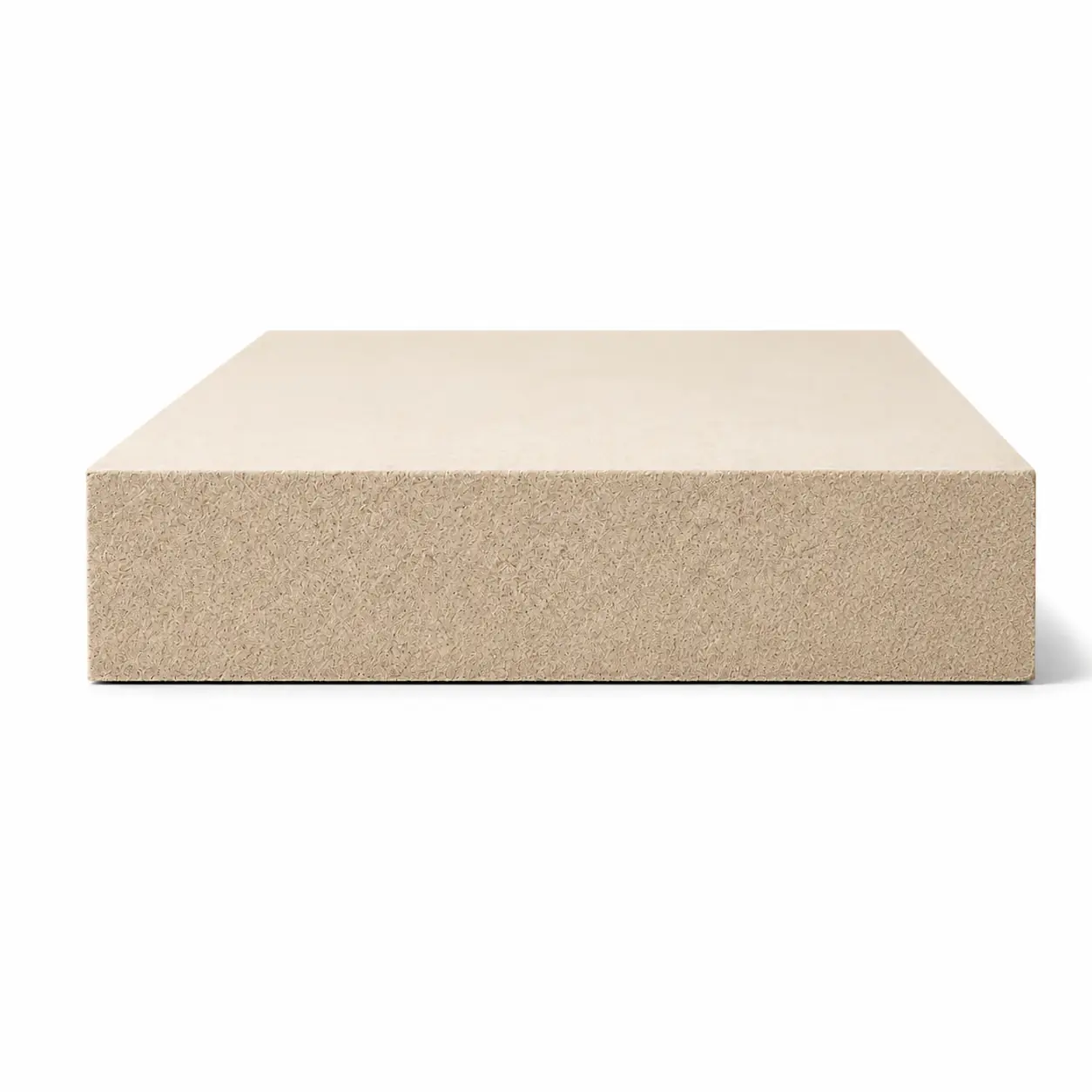
MDF should not be bought as one generic board. Medium-density, high-density, moisture-resistant and fire-retardant grades solve different problems; substituting one for another can create weak routed edges, swelling, coating defects or failed project compliance.
Supplier / market reference
These references narrow the first conversation. The exact order follows the approved sample, source and project requirement.
Structure & process
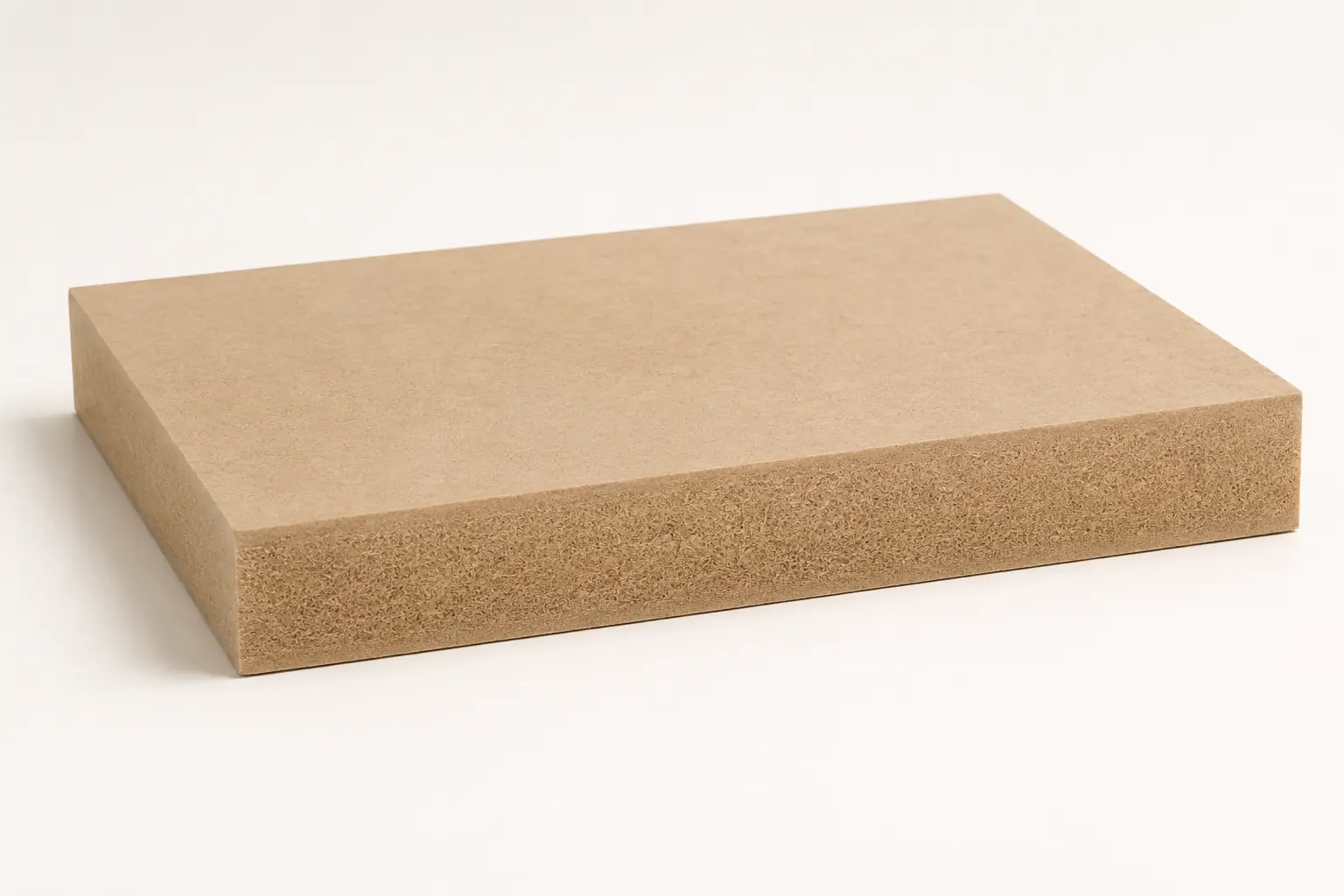
Fibre refining, resin selection, mat forming, press control and sanding create the density profile and surface quality. Specialty performance comes from a deliberately changed formulation—not simply a different board colour.
Wood is refined into consistent fibres. Fibre quality and contamination control affect surface smoothness, machining and finished-panel appearance.
The binder system is selected for standard, moisture-resistant or fire-retardant duty. Emission and specialty performance must be documented for the exact recipe.
The fibre mat is pressed under controlled heat and pressure. The resulting density profile influences edge strength, routing quality and panel weight.
Panels are conditioned and sanded to the target thickness and surface quality before painting, veneering, paper lamination or CNC machining.
Why this construction
Grade-by-grade guidance
Select the construction that matches the finished component, service environment and evidence requirement.
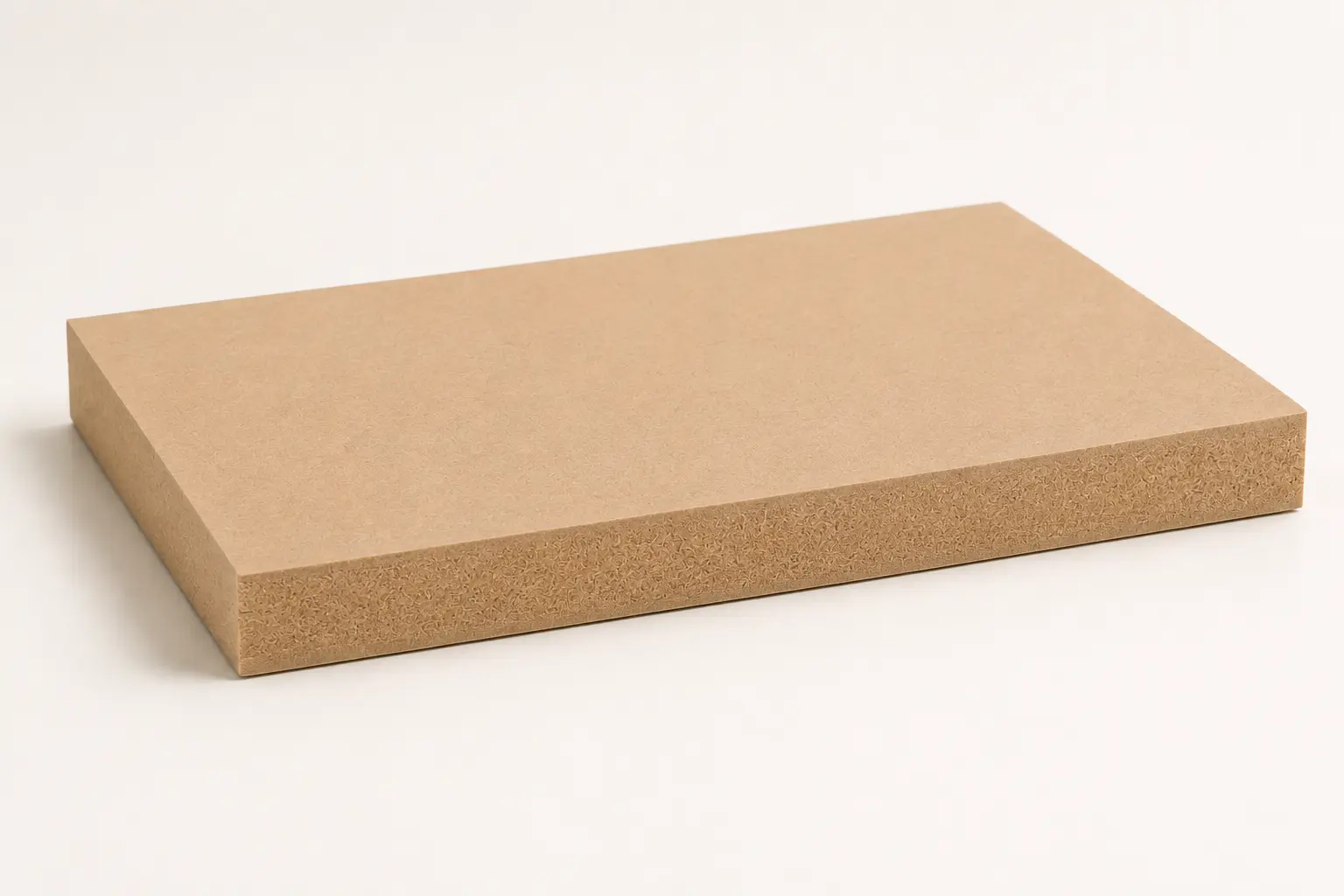
The balanced option for general interior furniture and repeat machining.
A controlled fibre and resin system provides a uniform core, smooth faces and predictable edges without the additional weight or specialty additives of other grades.
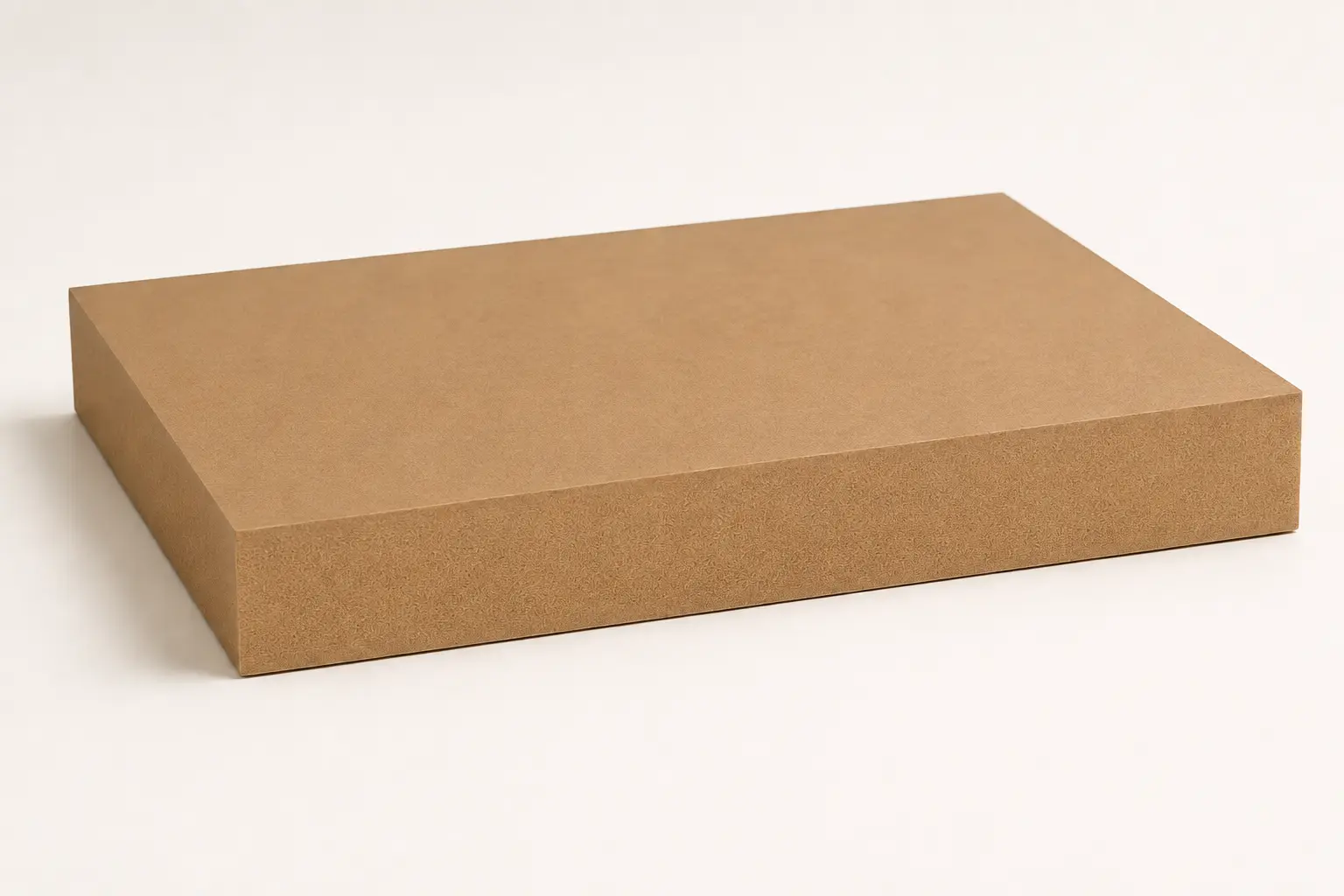
For thinner, harder-wearing or deeply machined components requiring a denser edge.
A higher target density and controlled press profile improve compactness and edge definition. Routable HDF can be selected when deep CNC patterns or crisp moulded details are required.
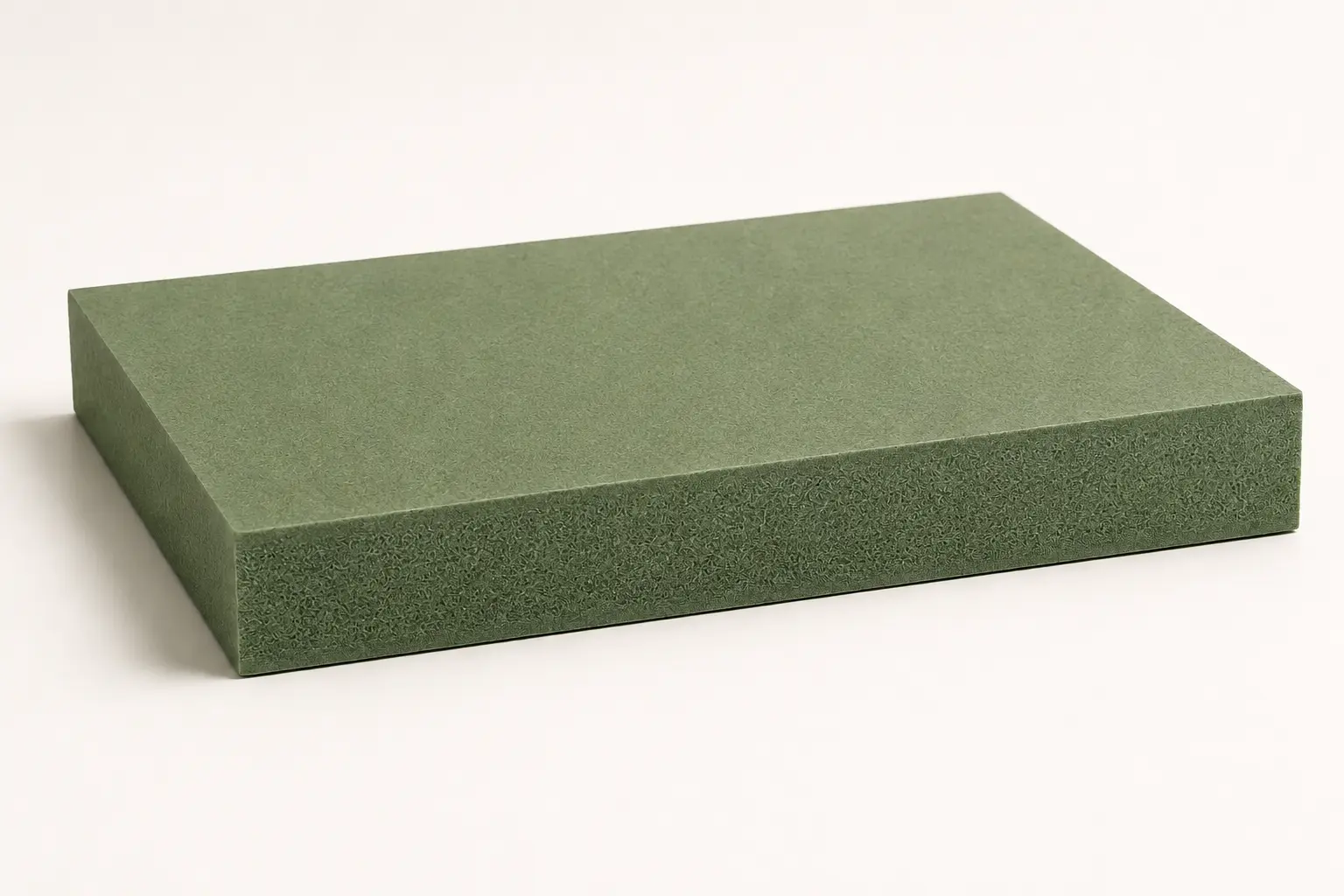
For humid interior conditions and components exposed to occasional moisture.
The resin system is upgraded or replaced to improve resistance to humidity and thickness swelling. Green colour is a common identifier, but it is not proof of performance.
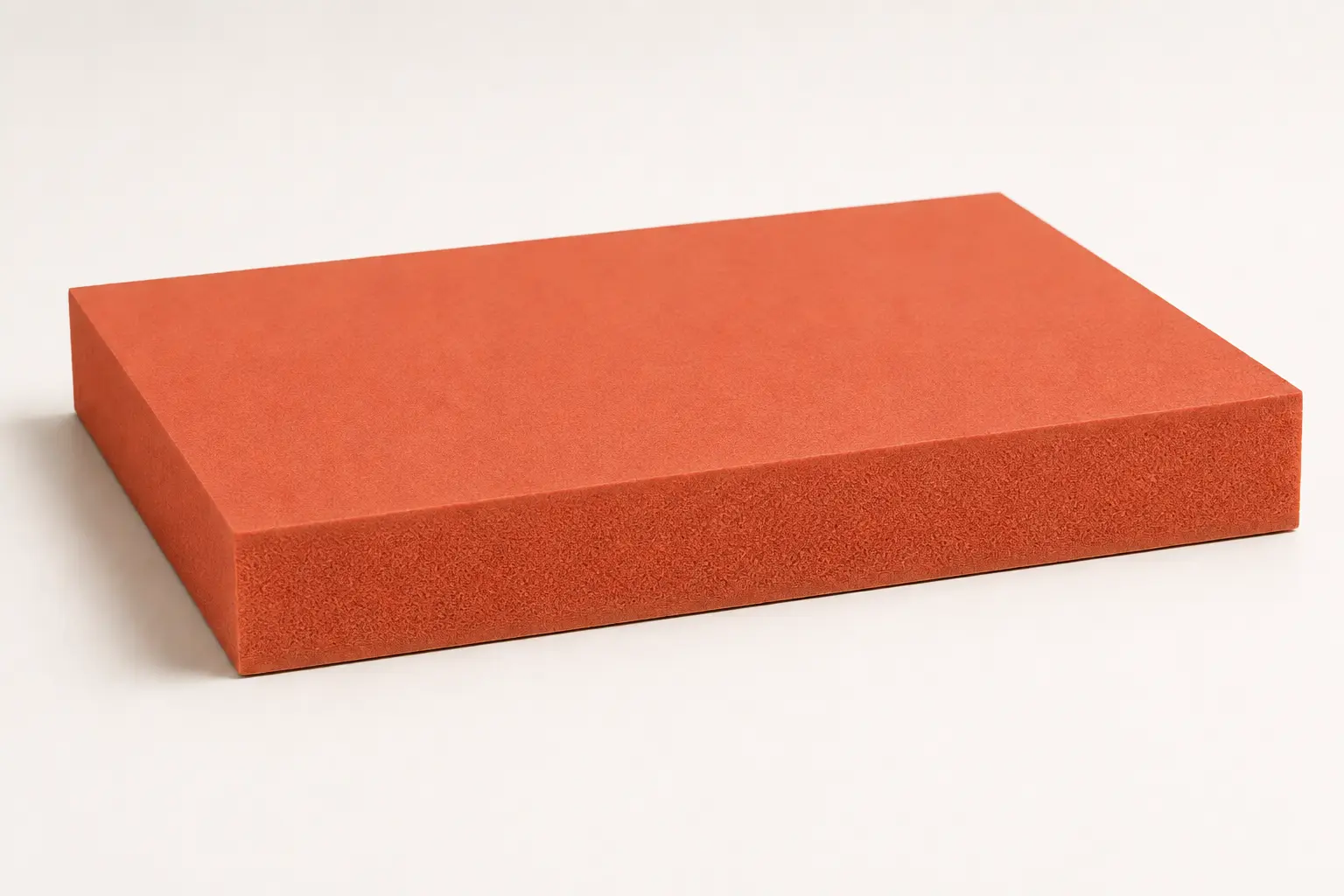
For contract interiors that specify improved reaction-to-fire performance.
Fire-retardant additives are integrated into the fibre and resin system. The valid performance depends on the exact thickness, density, finish and tested assembly.
Before the quotation
Exact MDF grade and intended finished component
Density profile, internal bond and routing requirement
Thickness, tolerance, sheet size and sanding quality
Emission class and destination-market test method
Moisture or fire report matching the exact construction
Paint, veneer, paper or laminate trial on the supplied face
Packing moisture protection and batch identification
Typical applications
Furniture and cabinet production
Routed and painted fronts
Wardrobes and interior fit-out
Door panels and mouldings
Commercial wall and display panels
Confirm density profile, emission class, moisture or fire requirement, surface quality and thickness tolerance before quotation.
Request a comparable quotation
Send the application, dimensions, construction, surface, performance target and commercial data. We will coordinate the unresolved details before quotation.