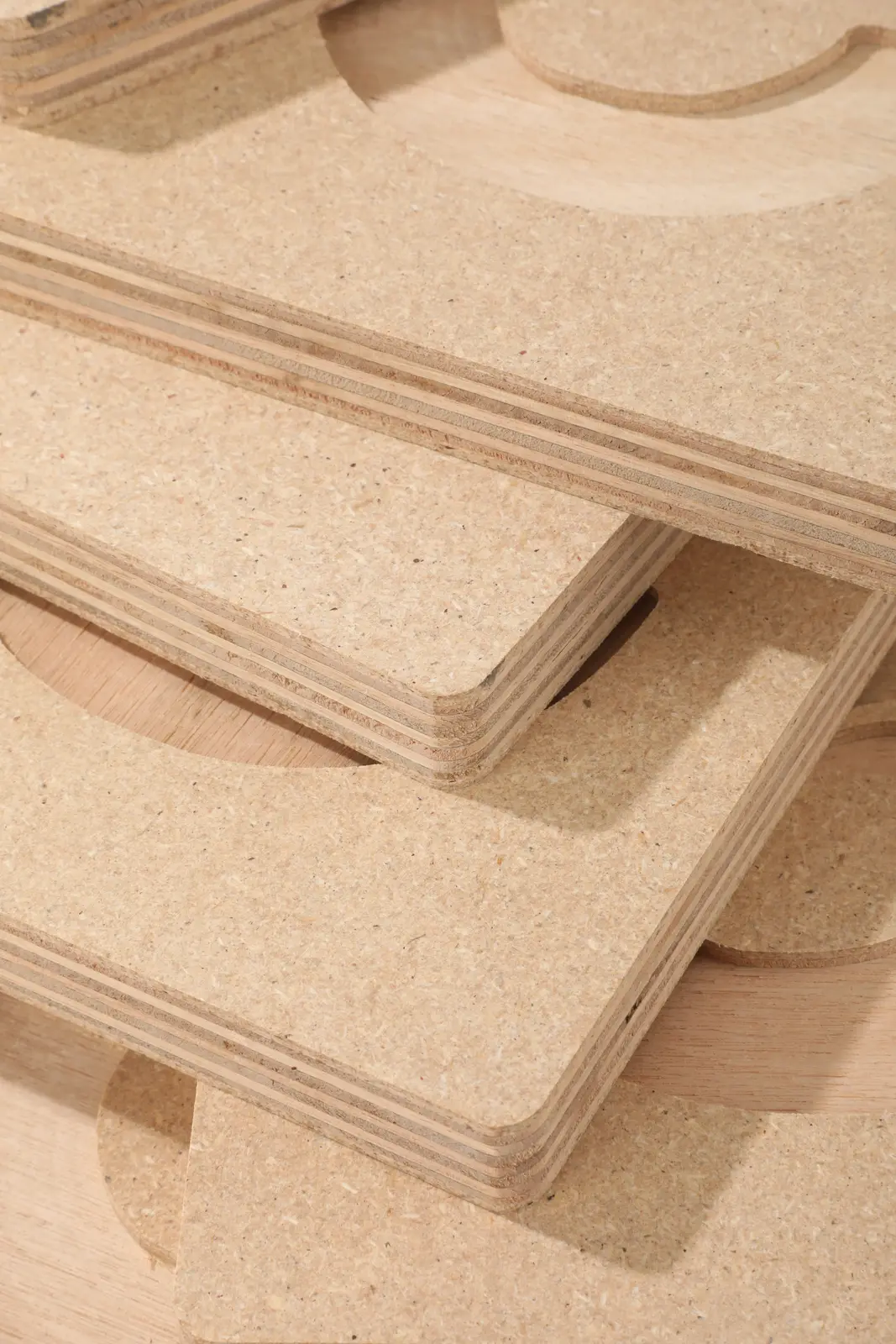
Core
Eucalyptus plywood body
Cross-laminated eucalyptus veneers provide the main panel thickness, fixing base and load distribution. Veneer moisture and lay-up balance influence flatness.

Plywood & lamination bases
Duraply combines a eucalyptus plywood core with balanced high-density New Zealand pine particle surface layers. The hybrid construction is precision-sanded to create a hard, uniform base for deep embossing, mirror PET, UV and decorative-paper finishing on repeat furniture-production lines.
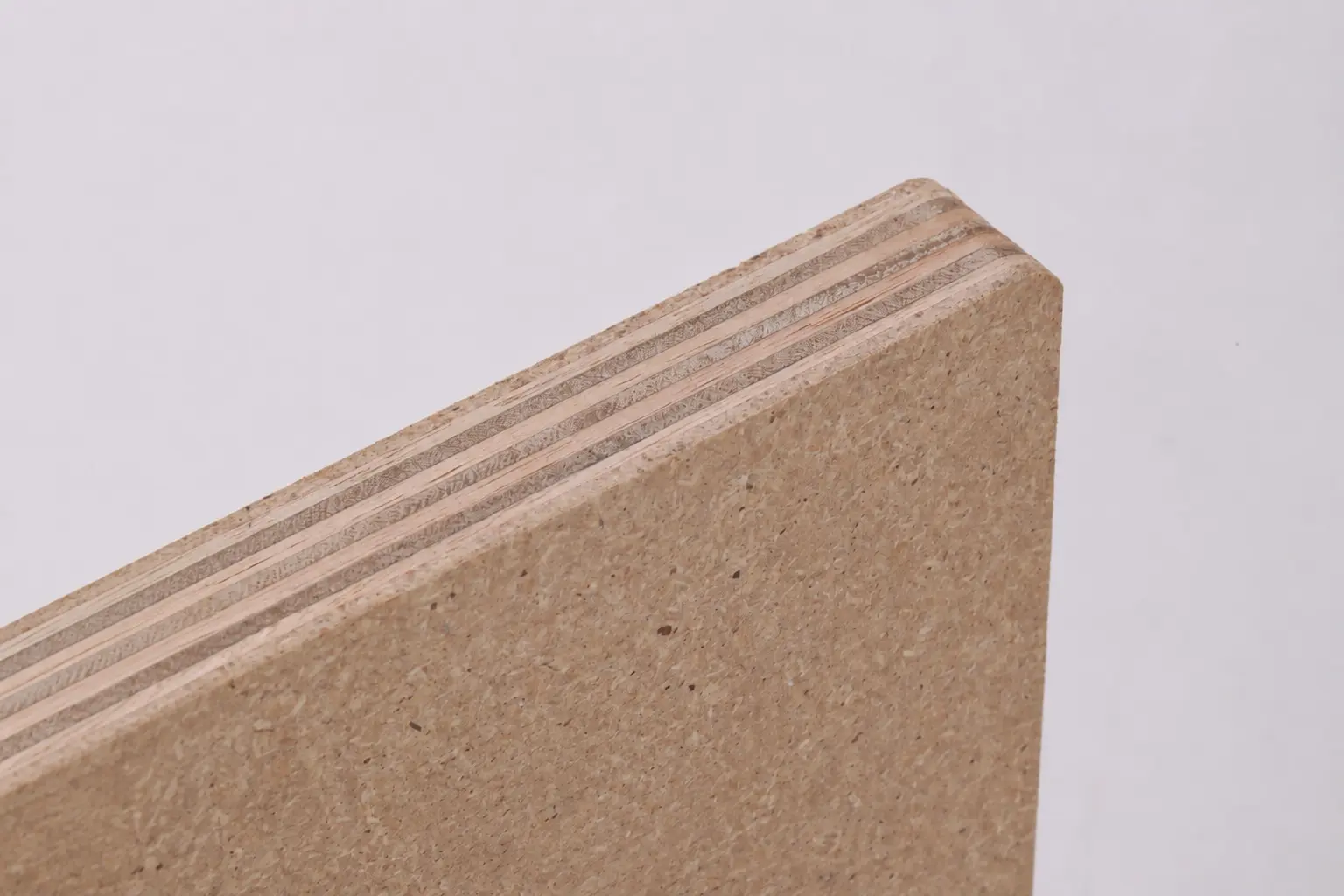
Duraply is designed for buyers who need plywood fixing performance without accepting an uneven lamination base. Its value is fewer surface defects, more predictable pressing and less line stoppage caused by thickness variation or veneer telegraphing.
Supplier / market reference
These references narrow the first conversation. The exact order follows the approved sample, source and project requirement.
Structure & process
The structure separates two jobs: the plywood core carries fixing and panel duties, while dense balanced surface layers create a consistent finishing platform.
Cross-laminated eucalyptus veneers provide the main panel thickness, fixing base and load distribution. Veneer moisture and lay-up balance influence flatness.
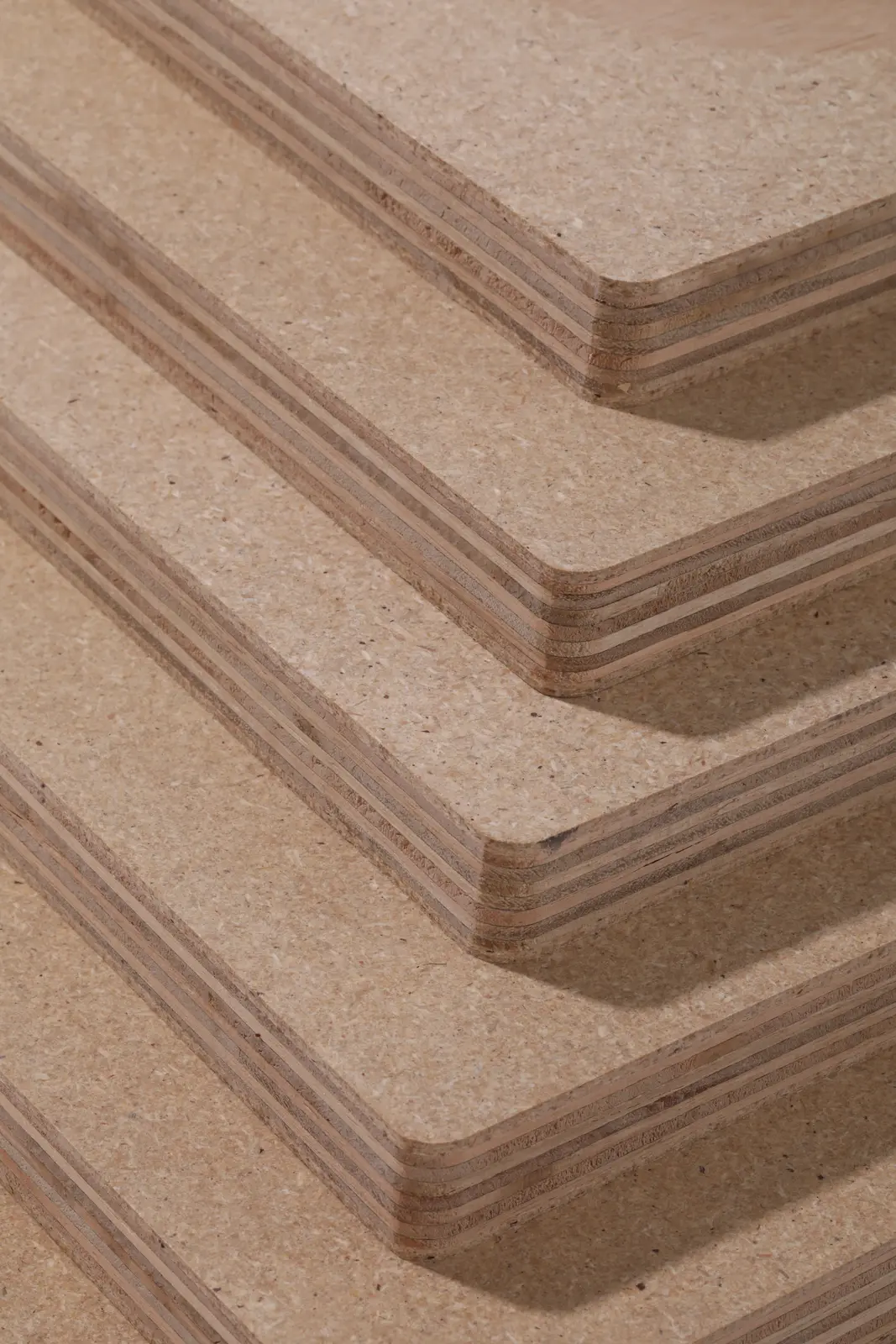
High-density New Zealand pine particle layers are applied to both faces as a balanced construction, helping mask veneer texture and create a harder finishing surface.
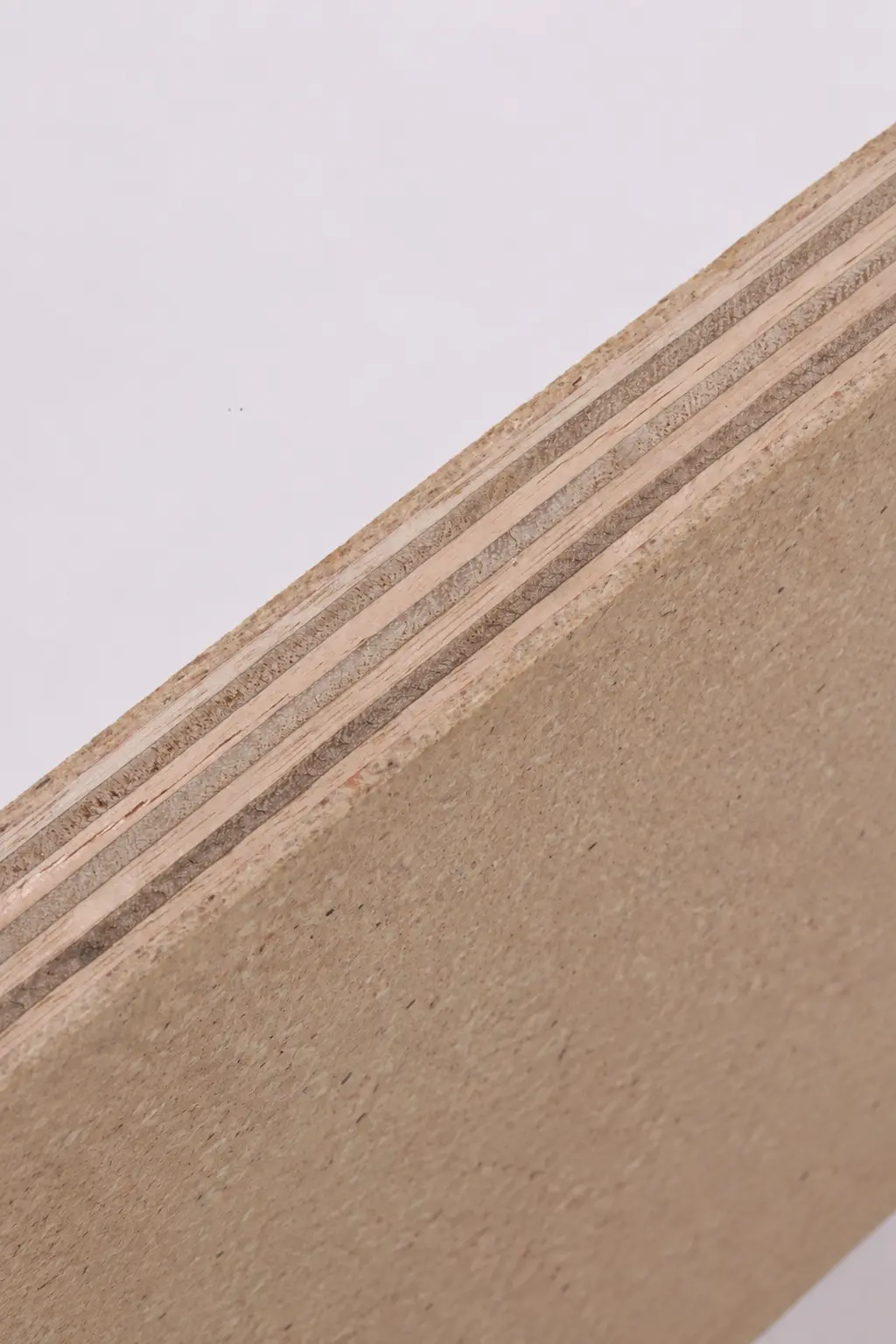
The board is sanded to control thickness across the sheet. The supplier reference is a four-corner tolerance within 0.1 mm, subject to order confirmation.
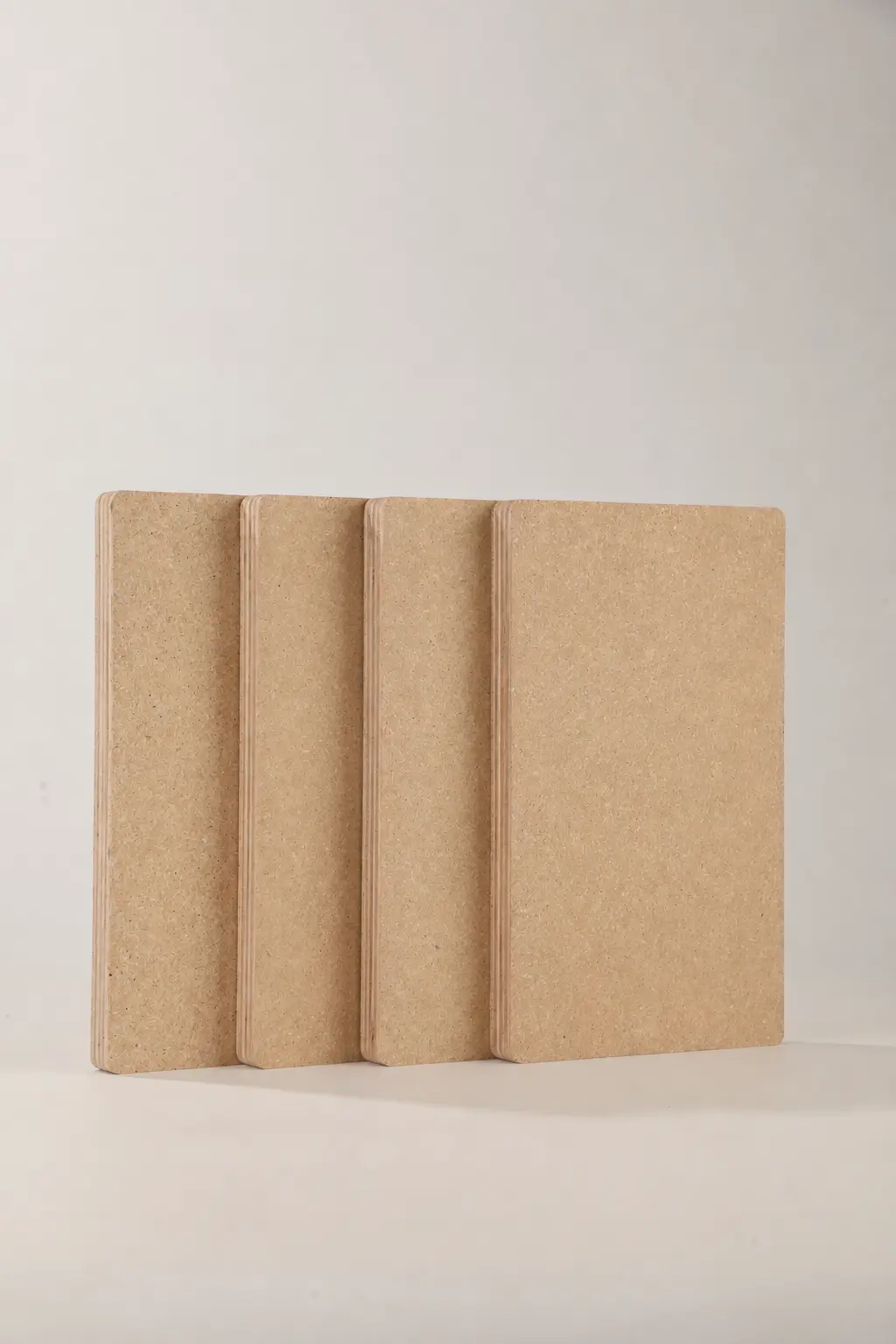
Mirror PET, UV, deep embossing and decorative paper each require the actual adhesive, temperature, pressure and surface preparation to be sample-tested.
Duraply structure analysis
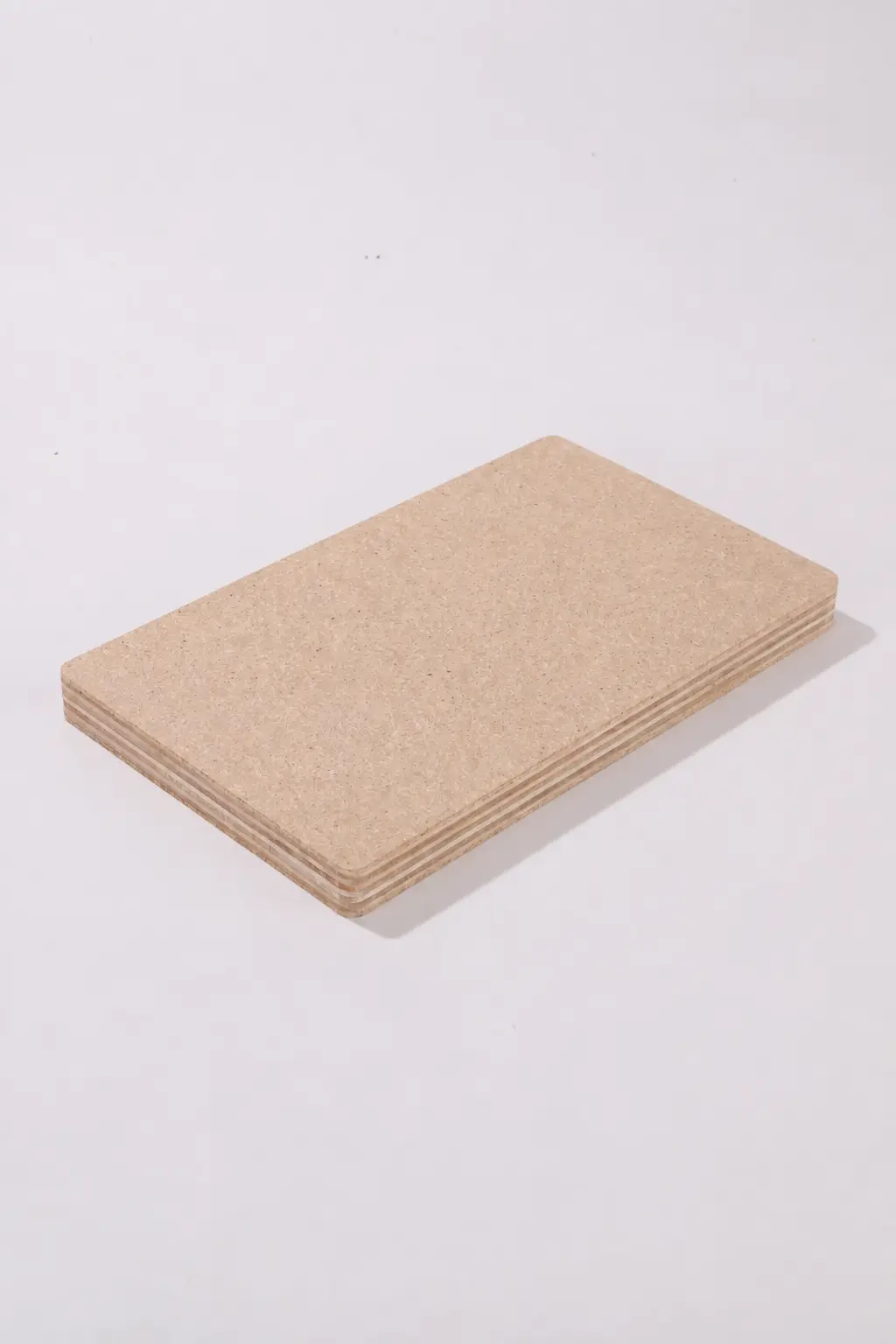
Duraply is a hybrid panel rather than ordinary faced plywood. Its calibrated pine-particle surfaces are engineered for finishing consistency, while the cross-laminated eucalyptus core provides the plywood body, fixing base and load distribution.
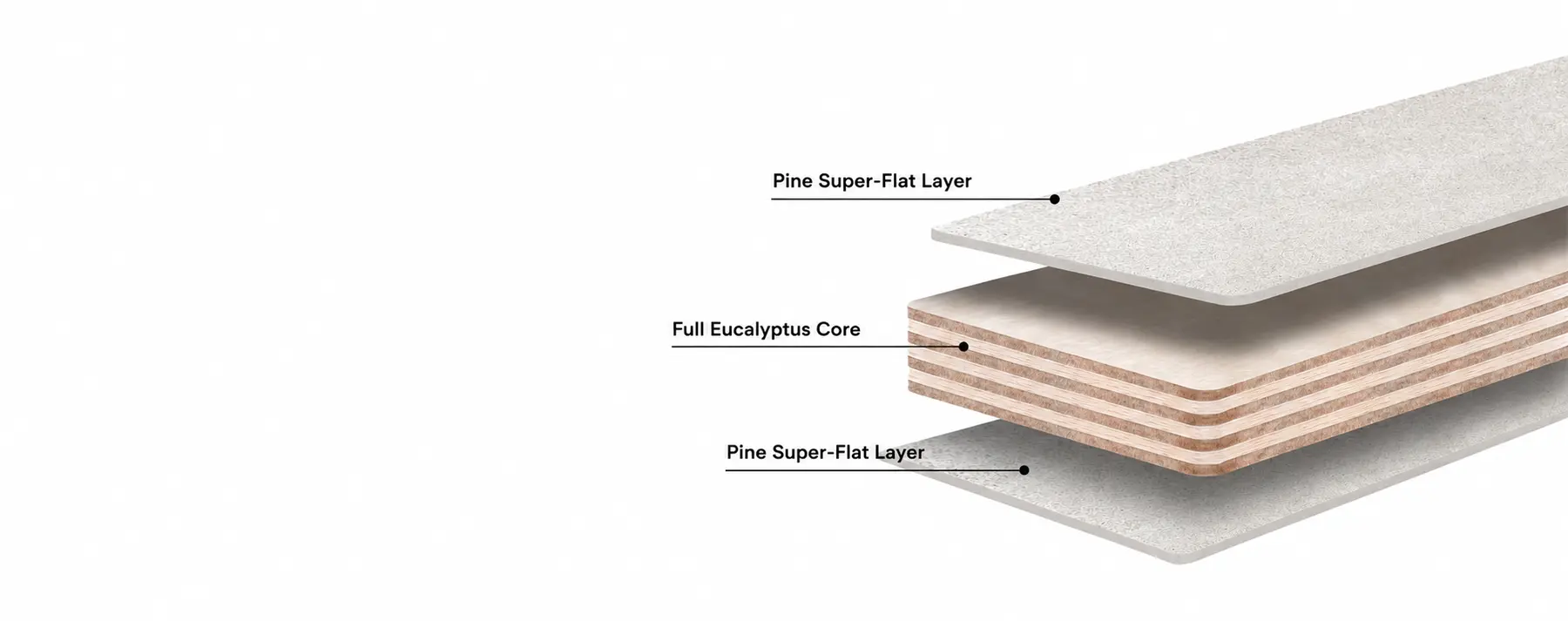
Fine New Zealand pine particles form a smooth, hard outer layer. The supplier reference is approximately 980 kg/m³, creating a more uniform base for PET, UV, decorative paper and deep embossing than an exposed veneer face.
The particle layer is applied to both sides rather than one face only. This balanced build helps manage pressing stress, flatness and surface consistency; the two faces should still use compatible finishing systems.
Alternating eucalyptus veneers form the main panel body. The core carries thickness, fixing and stiffness duties, while veneer moisture, lay-up balance, gaps and overlaps remain order-critical checks.
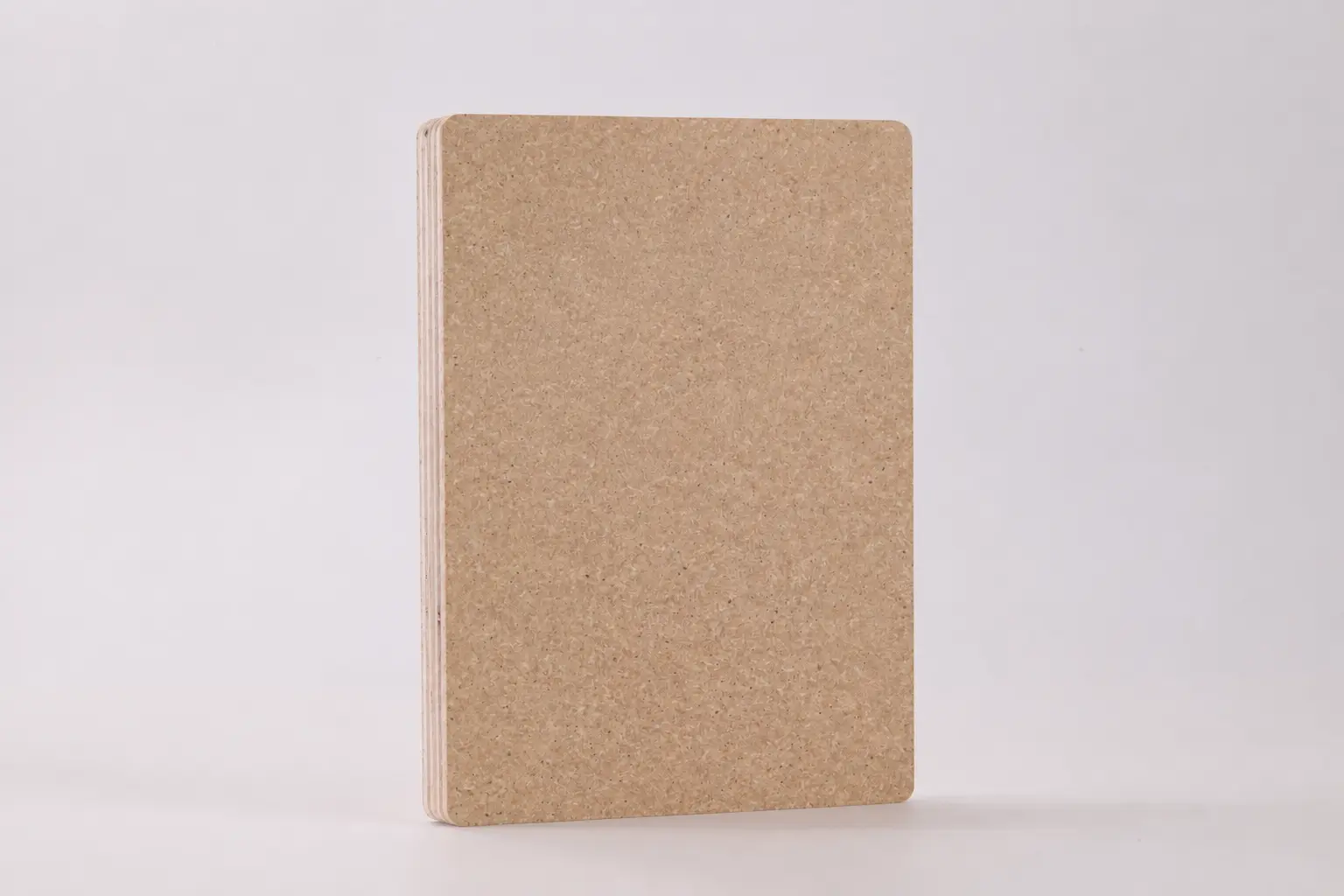
After pressing, the faces are sanded to control thickness and create an even lamination base. The supplier reference is a four-corner tolerance within 0.1 mm, subject to confirmation for the actual order.
Why this construction
Grade-by-grade guidance
Select the construction that matches the finished component, service environment and evidence requirement.
For high-gloss surfaces where small substrate defects remain visible.
The dense, calibrated faces reduce veneer telegraphing and provide a more uniform bonding surface than a conventional unsurfaced plywood face.
For pressed textures that demand a hard, consistent face.
The high-density surface layers support sharper pattern transfer while the plywood body provides a robust panel core.
For smooth coated surfaces and controlled industrial finishing.
Calibrated faces provide a predictable base for primer, coating or UV-curing systems after the required sanding and surface preparation.
For furniture panels requiring plywood performance beneath a uniform decorative face.
Balanced dense faces provide a consistent paper-lamination base on both sides, reducing visual variation and helping panel flatness.
Corrected Duraply material set
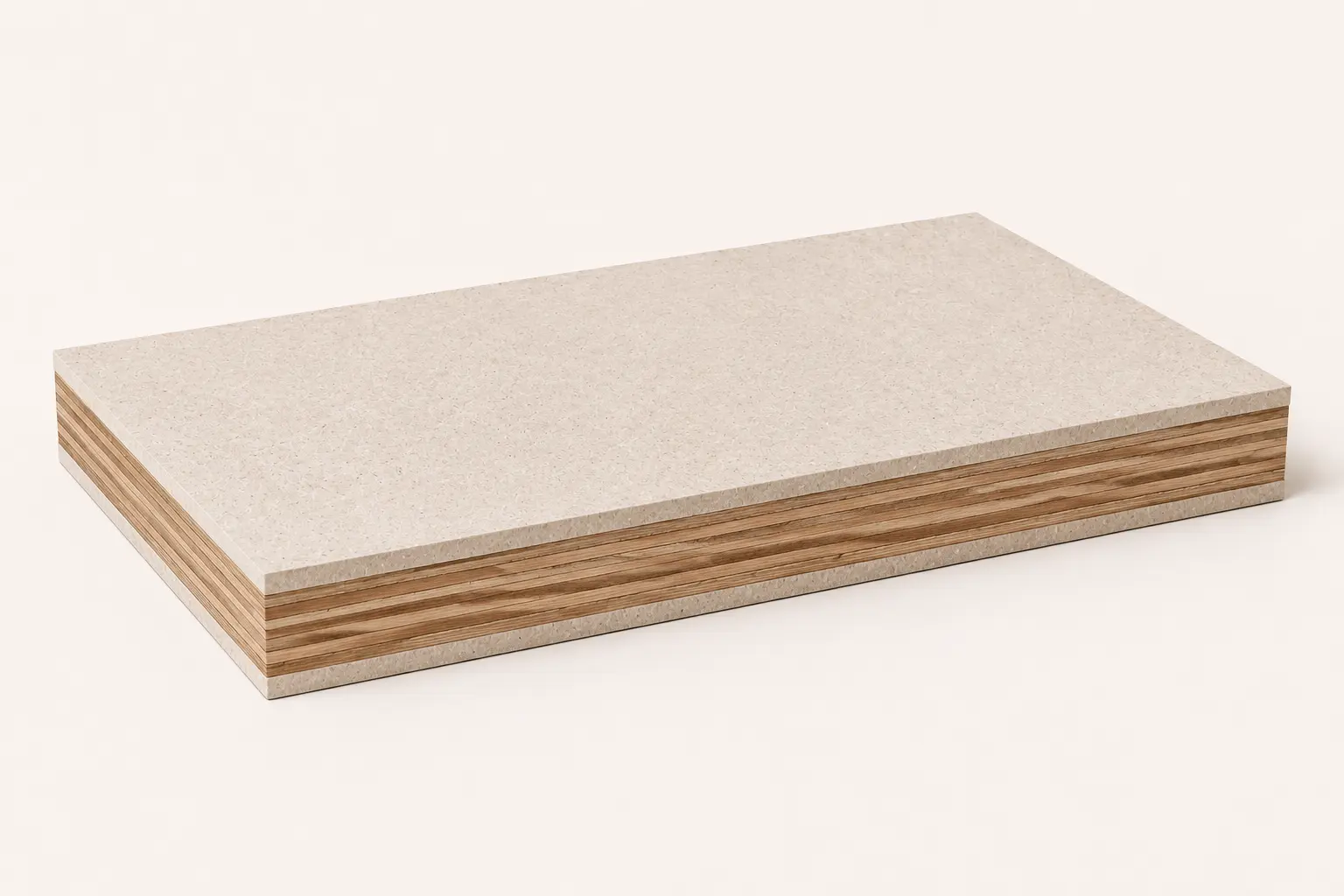
These two supplementary views complete the assembled-structure and sample-stack checks. Core, face, calibration and machining images now sit beside the points they explain.
Before the quotation
Finished surface route: PET, UV, embossing, paint or decorative paper
Target finished thickness and four-corner tolerance
Plywood core lay-up, veneer quality and permitted core gaps
Surface-layer density and sanding quality
Emission class and current order-matching report
Trial on the buyer's actual adhesive and press-line settings
Golden sample and batch inspection criteria
Typical applications
Cabinet and full-height door panels
PET and decorative-paper lamination
Furniture production
Flooring substrates
Schools, hospitals and nurseries
Surface finish, adhesive system, emission class and tolerance must be confirmed against the exact production source and order specification.
Request a comparable quotation
Send the application, dimensions, construction, surface, performance target and commercial data. We will coordinate the unresolved details before quotation.